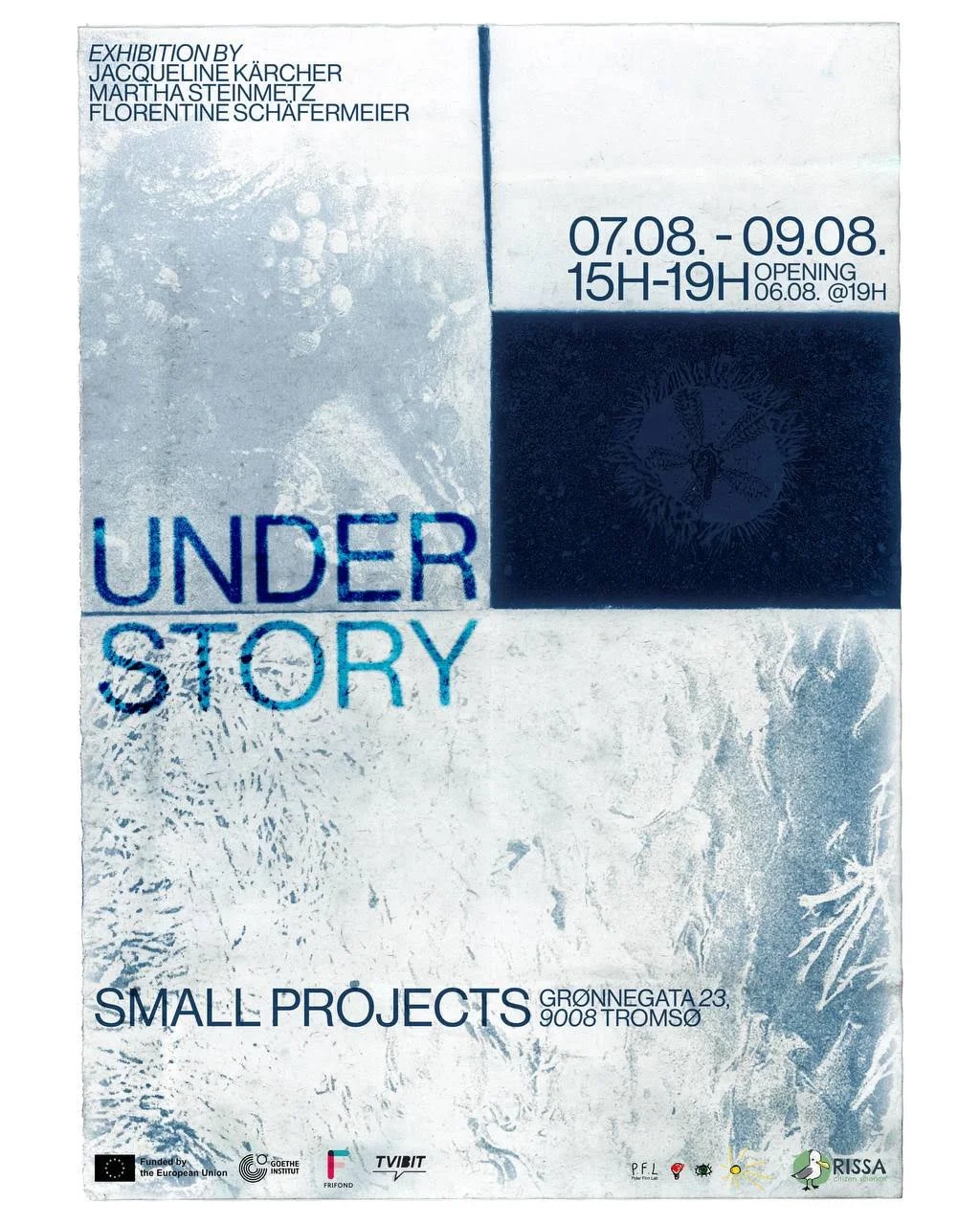
07.-09. August 2026
This collaborative research project explores how analogue photography, digital film, and sound can document local ecological action and communicate the multilayered experience of communal environmental efforts.
Set along the coastline of Tromsø, Northern Norway, the project focuses on the citizen-led restoration of disappearing kelp forests—key ecosystems for climate regulation and marine biodiversity. The initiative is organized by the local non-profit RISSA Citizen Science.
Through a combination of visual and sonic storytelling, the project seeks to make these restoration efforts both visible and emotionally resonant. Participating communities are involved throughout the process through conversations, field recordings, and shared moments of action. These encounters are translated into raw, unfiltered film footage, ambient soundscapes captured in the research environment, and analogue photographs developed using locally harvested seaweed.
The project's guiding research questions include: How can multimedia narratives foster care and encourage participation in environmental issues? What influence does hands-on restoration in the immediate environment have on shaping personal perspectives on global challenges such as biodiversity loss and climate change? And how can the values of slowness and locality be communicated within a media landscape driven by speed and distance?
The project is working toward the production of a short film and a printed research publication, both of which will be shared through exhibitions and online platforms. By making these outputs accessible to a broad audience, the project aims to help bridge the gap between science, art, and public awareness.
Understory is the first in a planned series exploring ecological repair through visual and sonic storytelling. It reflects the project's commitment to making environmental issues both visible and deeply felt through grounded inquiry, creative collaboration, and participatory methods.
The collaborative team consists of Jacqueline, Florentine, and Martha. Jacqueline and Florentine studied at Design Academy Eindhoven, while Martha holds a Bachelor's degree in Psychology and studied Fine Arts at Bauhaus University Weimar. The three met in Tromsø, where they came together to collaborate on a documentary exploring kelp forest restoration.
Jacqueline's work focuses on expanding access to democratic engagement and examining her generation's evolving relationship with educational, cultural, economic, and scientific institutions. Through observational documentation and dialogue with her surroundings, she brings together diverse perspectives. Using performative translations, visual media, and sound, her practice encourages people to connect, engage, and reflect on their role in shaping the future.
Florentine explores the complex relationship between humans and the more-than-human world through photographic research and film. Blending rigorous documentation with playful reinterpretation, her work is both thought-provoking and approachable, challenging perceptions through what she describes as "serious fun."
Martha's practice centers on attentive observation and the recording of fleeting moments, building a sound archive that highlights the beauty and fragility of life. Through immersive auditory spaces, her work invites quiet reflection and fosters renewed understanding.
Together, the three artists combine complementary media and methods to create a rich, multilayered approach to documentary practice. For this project, Jacqueline works with analogue photography, Florentine leads the filmmaking, and Martha is responsible for sound recording and sound design, forming a strong foundation for experimental, multimedia documentary storytelling.